

News & Posts
Mastering Synchronized Data Acquisition: The Foundation of Behavioral Insights

What if the invisible threads connecting eye movement, heart rate, and cognitive load were instantly visible as a single, perfectly aligned masterpiece of human data? Achieving this level of synchronized data acquisition is the only way to eliminate the frustration of manual alignment or the data drift that ruins long recording sessions. It's exhausting when the technical friction of integrating sensors from different manufacturers becomes a barrier rather than a bridge to discovery. We believe your focus should remain on the human element, not the struggle to stitch together fragmented timelines.
Discover how high-precision synchronization transforms disparate biological signals into a unified, actionable map of human behavior. By implementing a reliable framework for multi-sensor data fusion software, you'll reduce post-processing time and gain the confidence required for world-class findings. This guide explores the future of research. We'll examine how the latest 2026 standards, including the EU AI Act and ISO/IEC/IEEE 9945:2026, are integrated into advanced platforms like Prophea.X to empower your research legacy and expand the boundaries of scientific knowledge.
Key Takeaways
Understand why millisecond-level precision is vital for correlating biological signals with cognitive triggers to eliminate the risks of data drift.
Evaluate the advantages of Precision Time Protocol (PTP) over standard alignment methods to maintain a unified time domain across distributed research environments.
Bridge the gap between wearable Dikablis eye tracking glasses and stationary physiological sensors through high-precision synchronized data acquisition.
Adopt a strategic two-step workflow to audit your sensor landscape and establish a definitive master clock for reliable multimodal fusion.
Witness how Prophea.X empowers your research by automating the integration of disparate data streams into a clear, unified map of human behavior.
Table of Contents
- The Critical Role of Synchronized Data Acquisition in Behavioral Research
- Technical Mechanisms: From Hardware Clocks to Software Alignment
- Multimodal Fusion: Integrating Eye Tracking with Physiological Sensors
- Strategic Implementation: Designing a High-Precision Workflow
- Prophea.X: Redefining Precision in Multimodal Behavioral Analysis
The Critical Role of Synchronized Data Acquisition in Behavioral Research
Imagine trying to analyze a high-stakes flight simulation where the pilot’s eye movements are recorded just 50 milliseconds out of phase with their heart rate variability. That tiny gap transforms a breakthrough into a guessing game. We define synchronized data acquisition as the simultaneous capture of multiple signal streams within a unified, high-precision time domain. It’s the technical bedrock that allows us to map the complex architecture of human response with absolute certainty. While traditional industrial systems often focus on mechanical vibration or electrical load, our focus remains on the intricate, fast-moving dance between biological signals and technological interfaces.
Asynchronous data is a silent trap in Human-Machine Interaction (HMI) studies. When timestamps don’t align perfectly, researchers often fall victim to false correlations; attributing a physiological spike to a visual stimulus that the subject hadn’t actually seen yet. This process of data synchronization establishes the consistency required to turn raw numbers into a narrative of human intent. By eliminating these temporal offsets, you move beyond isolated metrics and begin to see the human element in its full, three-dimensional context. It’s about expanding the boundaries of what’s possible in behavioral science by ensuring your data reflects the reality of the user experience.
Data Drift and Jitter: The Silent Killers of Precision
Clock drift and jitter are the subtle enemies of scientific rigor. Clock drift occurs when two devices operate at slightly different frequencies, causing their timelines to pull apart over the course of a session. Jitter is the unpredictable variance in the timing of individual data packets. These aren’t just minor technical nuances. They’re the difference between a valid study and a discarded dataset. Environmental factors like ambient temperature or hardware limitations often exacerbate these misalignments. In long-duration behavioral studies, even a microscopic frequency mismatch accumulates into a significant chasm, rendering your results unreliable and your post-processing a nightmare.
The Human-Centric Benefit of Unified Timing
True insight comes from seeing the human element in its entirety. Linking eye-gaze patterns from Dikablis glasses directly to physiological spikes, such as heart rate or EEG alpha waves, unlocks a deeper level of understanding. This perfect alignment is the only way to validate theories regarding cognitive load, mental fatigue, and situational awareness. When every sensor speaks the same temporal language, you gain the power to prove exactly how a user’s biology reacts to a specific digital event. High-precision synchronization empowers researchers to see the underlying “why” behind the observable “what” of human behavior. Prioritizing the human element acts as our functional guide in every study we design.

Technical Mechanisms: From Hardware Clocks to Software Alignment
Master the architecture of time within your laboratory to unlock the full potential of your behavioral datasets. Achieving reliable synchronized data acquisition requires a sophisticated understanding of how hardware triggers and software algorithms interact to create a unified timeline. While hardware-level synchronization provides a rigid physical anchor, software-level fusion offers the agility needed to integrate modern, high-bandwidth sensors that often operate on independent internal clocks. Balancing these two approaches is essential for researchers who demand both clinical precision and the flexibility to explore the three-dimensional boundaries of human-technology interaction.
Specialized DAQ hardware acts as the physical heartbeat of a high-end research environment. By establishing a central temporal anchor, these systems ensure that every data packet from an EEG cap or a skin conductance sensor is tagged with a definitive, universal timestamp. This centralized approach prevents the cumulative drift from ever taking root, ensuring your data remains consistent throughout even the longest recording sessions. If you’re designing a new facility or upgrading an existing one, consulting with experts on lab architecture ensures your hardware and software work in perfect harmony to empower your scientific legacy.
Hardware Synchronization: The Gold Standard for Precision
Utilize Transistor-Transistor Logic (TTL) triggers to achieve millisecond-perfect alignment across your hardware stack. TTL signals provide a physical electrical pulse that forces all connected devices to start or mark an event simultaneously. For distributed research labs, the Precision Time Protocol (PTP), or IEEE 1588, offers a network-based alternative that maintains sub-microsecond accuracy across Ethernet connections. Unlike the older Network Time Protocol (NTP), PTP is designed for the high-precision requirements of 2026 research. Prioritize hardware-level synchronization when your study demands the highest possible fidelity, such as during rapid reaction-time tests or neurophysiological mapping where every microsecond counts.
Software-Based Temporal Sample Alignment (TSA)
Software-based alignment addresses the inherent latencies found in USB or wireless data streams. Modern platforms use Temporal Sample Alignment (TSA) to resample and shift data points based on known system delays and packet arrival times. This process allows for the seamless integration of wearable sensors, like Dikablis Glasses, which may transmit data with slight timing variances due to wireless interference. By performing high-frequency timestamping at the point of capture, software ensures that the computational load of real-time analysis doesn’t compromise the precision of your final behavioral map. This digital fusion is the key to creating a holistic view of the human element without the constraints of physical cabling, allowing for more naturalistic study environments.
Multimodal Fusion: Integrating Eye Tracking with Physiological Sensors
Synthesize visual attention with biological feedback to create a unified data stream that breathes life into raw numbers. We view multimodal fusion not as a mere mathematical challenge, but as a visionary expansion of what it means to understand human intent. By merging the “where” of visual gaze with the “how” of physiological response, you build a holistic map of the user experience. Achieving synchronized data acquisition across these diverse platforms allows you to transcend isolated metrics, moving toward a three-dimensional understanding of human-technology interaction. It’s the difference between seeing a subject’s actions and understanding their underlying cognitive state.
Integrating wearable technology like Dikablis Glasses with stationary lab equipment presents unique physical and temporal hurdles. Mobile eye trackers operate in a dynamic, untethered environment, while EEG or EMG systems often remain anchored to high-fidelity, stationary amplifiers. Bridging this gap requires more than just standard software; it demands custom eye tracking integration that respects the specific latencies of each sensor. When these systems achieve harmony, the technical friction of the lab disappears, leaving only the pure, unadulterated signal of the human element. This synergy is the foundation of synchronized data acquisition in modern HMI research.
Consider the exact moment a driver becomes distracted during a simulation. A standalone eye tracker might show a gaze shift, but only synchronized data reveals the physiological stress spike and the neural hesitation that occurred milliseconds prior. This precise temporal gating allows you to identify the specific cognitive triggers that lead to performance failure. By capturing the spatial geometry of behavior alongside biological physics, you empower your team to design safer, more intuitive industrial environments. We don’t just provide tools; we partner with you to ensure your data reflects the true complexity of human behavior.
EEG and Eye Tracking: Mapping the Brain and Gaze
Synchronizing neural activity with visual fixations is essential for decoding how the brain processes information in real time. Our EEG and eye tracking integration guide provides the technical framework necessary to align these high-frequency signals. By using precise temporal gating, you can filter out the “noise” inherent in multimodal datasets, ensuring that every EEG alpha wave corresponds exactly to a specific visual fixation. This clinical precision is what allows researchers to validate complex theories of cognitive load and mental fatigue with absolute confidence.
Beyond Vision: EMG, GSR, and Motion Capture
Expand your research boundaries by aligning muscle activity (EMG) and galvanic skin response (GSR) with visual attention and physical movement. Integrating motion capture data adds a vital layer of physical ergonomics to your cognitive findings, creating a comprehensive behavioral profile. Our behavioral research lab consulting services help you navigate the complexities of these multi-sensor setups, from initial sensor selection to final data fusion. We prioritize the human element in every lab we design, ensuring that your technical capabilities grow alongside your scientific ambitions and your legacy of excellence.
Strategic Implementation: Designing a High-Precision Workflow
Transitioning from theoretical models to a functional, high-precision laboratory requires a disciplined, step-by-step methodology. Establishing a robust framework for synchronized data acquisition ensures that your technical infrastructure supports, rather than hinders, your scientific ambitions. By prioritizing a structured workflow, you eliminate the “black box” of data alignment and gain total transparency over your multimodal streams. This strategic approach is what separates a collection of sensors from a visionary behavioral research ecosystem.
- Step 1: Audit your sensor landscape. Begin by mapping every device in your study. Identify the “Master Clock” that will serve as the temporal source of truth for all peripheral sensors.
- Step 2: Establish a common trigger protocol. Decide between Digital I/O (TTL) for hardwired precision or Network Sync (PTP) for distributed setups. Consistency here is the foundation of error-free fusion.
- Step 3: Validate timing accuracy with a “sync-check”. Perform a short pre-flight recording to verify that all streams are firing in unison. This ritual catches latency issues before they contaminate your primary dataset.
- Step 4: Use a unified software platform. Centralize your recording to monitor all streams simultaneously. This provides real-time situational awareness of your data quality and signal integrity.
- Step 5: Apply post-hoc alignment algorithms. Use advanced multi-sensor data fusion software to correct for residual jitter or known hardware latencies, ensuring a clinical level of precision in your final map of human behavior.
Selecting the Right Synchronization Architecture
Choose your architecture based on the physical constraints of your research environment. Centralized DAQ hubs offer the most stable physical connection for synchronized data acquisition, while distributed network-based synchronization provides the flexibility needed for large-scale or naturalistic studies. Evaluate the latency of wireless connections against the reliability of wired setups; even modern 2026 wireless protocols can introduce timing variance in high-interference zones. It’s essential to balance your research lab setup cost against the specific precision requirements of your study to ensure long-term utility. If you’re ready to refine your technical architecture, speak with our consultants to optimize your workflow.
Calibration and Validation Protocols
Implement a digital “clapperboard” method by creating a simultaneous event that is visible across all sensors. This might involve a specific visual stimulus paired with a distinct physiological trigger or an electronic pulse. Automated validation routines within your behavioral research software can then calculate the offset between these streams with microsecond accuracy. Proper documentation of these synchronization metrics is no longer optional; it’s a requirement for meeting industrial safety standards and high-impact academic publication. By treating validation as a core component of your study design, you build a legacy of excellence and trust in your behavioral findings.
Prophea.X: Redefining Precision in Multimodal Behavioral Analysis
Prophea.X emerges as the visionary engine that breathes life into the complex architecture of behavioral research. It acts with the agency to unite disparate data streams, transforming the technical friction of the past into a streamlined, automated workflow. By placing the human element at the center of its functional design, this platform redefines the boundaries of synchronized data acquisition. It doesn’t just record; it orchestrates a symphony of signals, from the rapid fixations of an eye tracker to the subtle fluctuations of a heart rate monitor. This level of precision is the new standard for 2026, where the margin for error in high-stakes research has effectively vanished.
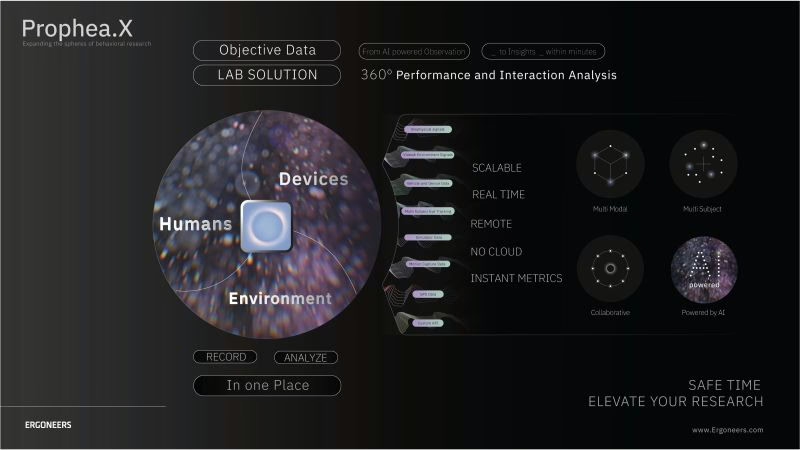
Eliminate the exhausting hours of manual alignment with the “One-Click” synchronization capabilities of Prophea.X. It automates the fusion of eye tracking, high-definition video, simulator, vehicle, device and physiological data by establishing a master temporal domain the moment you begin recording. This reduction in technical friction empowers your team to move from data collection to analysis with unprecedented speed. By ensuring that every signal is locked in time, Prophea.X provides the error-free data necessary for the next generation of human machine interaction studies. It’s a partner in your scientific evolution, designed to scale alongside your most ambitious projects.
Seamless Integration with Dikablis and Third-Party Sensors
Experience the plug-and-play nature of Ergoneers hardware within a unified ecosystem. Prophea.X is built to recognize Dikablis Glasses and other proprietary sensors instantly, but its influence doesn’t stop at our own hardware. Robust API capabilities allow for the integration of specialized third-party sensors, ensuring your laboratory remains an agile, future-proof environment. This flexibility is paired with rigorous, automated validation routines that confirm signal integrity in real-time. By providing transparent data provenance, the platform establishes the scientific authority required to meet the high-risk requirements of the EU AI Act and other 2026 regulatory standards.
From Raw Data to Human Insights
Witness the transformation of raw temporal data into a coherent, three-dimensional map of human behavior. Prophea.X visualizes synchronized streams in a single, intuitive interface, allowing you to see the immediate physiological impact of a visual stimulus. It bridges the gap between biological physics and practical application, turning complex datasets into actionable insights for industrial training or academic discovery. We invite you to expand the boundaries of your knowledge and secure your research legacy through clinical precision. Experience the future of behavioral analysis with Prophea.X and redefine what’s possible in your lab.
Empowering the Next Era of Behavioral Discovery
Mastering the temporal architecture of your lab is the definitive step toward unlocking truly actionable human insights. By moving beyond fragmented signal streams and embracing a unified time domain, you eliminate the technical friction that once stalled progress. We’ve explored how hardware triggers and advanced software alignment create the clinical precision required to map cognitive triggers with absolute certainty. As a spin-off from the Technical University of Munich (TUM), we understand that scientific rigor is the foundation of every breakthrough.
Our legacy of excellence is built on long-standing partnerships with global leaders in the automotive and aerospace sectors. They trust us to provide the error-free precision needed for high-stakes human-machine interaction studies. Achieving high-fidelity synchronized data acquisition is no longer a hurdle; it’s a strategic advantage that Prophea.X delivers through automated multimodal fusion. Prioritizing the human element acts as our functional guide; it ensures your research expands the boundaries of what’s possible.
Elevate your research with the Prophea.X multimodal platform and join a community of visionaries dedicated to the evolution of behavioral science. Your data deserves a unified voice.
Frequently Asked Questions
Clock synchronization ensures all devices share a common time reference, while synchronized data acquisition refers to the precise alignment of recorded samples from disparate sensors. Clock sync is the foundation; data sync is the result. Achieving this harmony allows you to correlate neural spikes with visual fixations without the risk of temporal misalignment.
Prophea.X is designed as a visionary engine that integrates seamlessly with a wide range of third-party sensors and eye trackers. It acts as a central hub, using advanced APIs to bridge the gap between different manufacturers. This flexibility ensures your laboratory remains a holistic environment where the human element is prioritized over hardware brand constraints.
Acceptable data drift depends on your research goals, but cognitive studies typically require alignment within a 10 to 20 millisecond window. In high-stakes HMI research, even a microscopic shift can lead to false correlations. We recommend aiming for sub-millisecond precision to maintain the clinical authority of your behavioral findings.
Wireless synchronization has advanced significantly with 2026 protocols, yet wired connections remain the benchmark for absolute stability. While wireless systems offer freedom of movement for wearable Dikablis Glasses, they’re susceptible to environmental interference and jitter. Use wired architectures for stationary lab setups where every microsecond of precision is non-negotiable.
Synchronization failures often stem from frequency mismatches between internal hardware clocks or unpredictable network jitter. Environmental factors, such as temperature fluctuations affecting crystal oscillators, also contribute to cumulative drift. Establishing a common trigger protocol and a definitive master clock is the only way to safeguard your data integrity against these silent killers.
Precision Time Protocol operates by establishing a master-slave hierarchy across your local network to achieve sub-microsecond accuracy. It continuously exchanges timing packets to calculate and correct for path delays between sensors. This creates a unified temporal domain that empowers distributed research teams to capture complex multimodal data without physical cabling constraints.
You don’t always need a dedicated sync box if you utilize the advanced software-level fusion capabilities of Prophea.X. However, high-fidelity studies involving EEG or EMG often benefit from a hardware anchor to manage TTL triggers. We provide lab consulting to help you determine the most efficient architecture for your specific research ambitions.
Verify your alignment by performing a “sync-check” or digital clapperboard event before your main data collection begins. Analyze the resulting timestamps in your software interface to ensure that a single physical event is reflected identically across all streams. This validation routine provides the confidence required for academic publication and industrial safety standards.