

News & Posts
Eye Tracking for Simulators: 2026 Behavioral Insights Guide

What if a simulator could reveal not only what a trainee did, but where attention shifted, when workload rose, and how decisions unfolded?
Eye Tracking for Simulators
That’s the promise of eye tracking for simulators. Dynamic scenes can make gaze data harder to interpret, and without reliable synchronization, it is difficult to relate eye movements to simulator events or physiological signals. Here a gaze analysis integration comes into play.
Research systems can help address these challenges by capturing gaze alongside other measures. This guide explains how to assess tracking quality, align eye-tracking data with simulator telemetry and measures such as EEG or heart rate, and turn recordings into useful behavioral evidence. It also explains why a system designed for consumer use may not meet the needs of a research study.
Ergoneers offers its own Dikablis eye-tracking hardware as much as pluag and play compability with Tobii Glasses 3 for Prophea.X, a platform for synchronizing and alysing most complex data. This guide covers how those tools, along with research consulting and integration, can support studies in driving, flight, and other simulation environments. The goal is to reduce data friction and make it easier to investigate attention and situational awareness to improve human performance and usability.
Key Takeaways
- Use eye tracking for simulators to examine attention through gaze data, rather than relying only on observation or participant recall.
- Assess sampling rate, calibration, and parallax to determine whether gaze data can capture behavior in a 3D environment.
- Compare research systems by their access to raw measurements and data quality information, not just by how they display gaze.
- Combine gaze with simulator telemetry and physiological signals for a broader view of workload and performance.
- Explore how Prophea.X can bring complex data streams together, with Ergoneers’ consulting supporting simulator study design.
Beyond Immersion: The Strategic Role of Eye Tracking in Simulation Research
A simulator can recreate a cockpit, roadway, or clinical scenario, but immersion alone does not show how a person processes it. Eye tracking for simulators records where and when a participant looks, helping researchers examine attention, workload, and interaction with the simulated environment. For a foundational overview of the method and its applications, see Eye tracking.
Gaze data can add measurable evidence to observer notes and participants’ retrospective accounts. Researchers might examine whether a driver looked toward an automotive HMI alert, whether a pilot scanned relevant instruments, or how a clinician searched for information in a medical simulation. Gaze alone does not reveal what someone thought or understood, but it provides a useful starting point for behavioral analysis.
Define the research question before choosing metrics. Identify the displays or objects that matter, what counts as a relevant glance, and which scenario events should anchor the analysis. A consistent coding plan makes it easier to compare gaze behavior across participants and identify patterns for further investigation. This turns simulated activity into structured evidence about how people interact with complex systems.
Quantifying Situational Awareness
Gaze patterns can help researchers assess whether trainees distribute attention across relevant information sources and shift focus as conditions change. Looking toward an alert does not prove that someone perceived or interpreted it. Consider gaze alongside task outcomes and scenario timing instead. Fixation patterns may also highlight cockpit or dashboard elements that attract attention late, compete with critical displays, or receive little attention, giving design teams evidence to investigate.
Measuring Cognitive Load and Mental Fatigue
Pupillometry measures changes in pupil size and can provide an additional indicator of mental effort. Lighting, fatigue, and other factors can also affect pupil response, so interpret it in context. During a simulated failure, gaze may narrow onto one instrument or screen while other relevant areas receive less attention. This possible “tunnel vision” is a prompt for further analysis, not a standalone diagnosis of overload.
In gaze analysis, cognitive load is the mental effort associated with a task. Prolonged gaze duration on an area can indicate increased processing demand, but it cannot measure cognitive load by itself. Consider the pattern alongside task demands and other behavioral measures to distinguish focused processing from missed information or fatigue.
The Anatomy of High-Precision Gaze Data in Synthetic Environments
Reliable eye tracking for simulators takes more than positioning a sensor in front of a participant. Match the tracking method to the simulator, calibrate gaze to its visual geometry, and choose a sampling rate suited to the behavior under study. These decisions affect whether a recording can capture a brief glance toward an alert or only a broad pattern of visual attention.
Sampling rate, measured in hertz (Hz), indicates how many gaze samples a system records each second. A higher rate can provide finer temporal detail for examining rapid eye movements, including saccades, while a lower rate may suit slower viewing patterns. The right setting depends on the research question. Check the device’s current specifications and test whether they meet the needs of the study.
Three-dimensional environments add geometry challenges. Parallax can create a mismatch between the eye’s measured direction and the apparent location of an object, particularly when a participant moves relative to displays or simulator surfaces. Calibrate for the intended viewing position and relevant regions of interest, then check calibration after changes to seating, headset fit, or display layout. Infrared illumination can support pupil and eye-feature tracking without relying on visible light, but reflections, changing illumination, and other environmental conditions still need attention.
Wearable Eye Tracking with Dikablis Professional
For a 360-degree cockpit or another environment where participants turn their heads to inspect the scene, wearable systems can record gaze in relation to the viewed environment rather than a single fixed screen. Ergoneers offers Dikablis Professional glasses for research eye tracking. Check the current specifications for your setup, and assess fit, calibration stability, and comfort during movement. The equipment should remain positioned as participants move without interfering with the task.
Remote Eye Tracking for Screen-Based Simulations
Remote systems can suit desktop simulations where participants remain oriented toward a monitor and need to use a keyboard or controls freely. Their practical limits include the calibrated viewing zone and the displays they can measure reliably. If a study uses secondary monitors or a separate control panel, check whether those areas fall within the tracker’s field of view and calibration space. Otherwise, gaze may be recorded without being mapped accurately to the relevant target.
The Federal Register notice on behavioral insights in simulation research describes a planned driving-simulator study that includes driver gaze direction, illustrating one applied use of gaze data. To evaluate the right hardware and setup for a specific simulator, consider discussing your eye-tracking integration needs with Ergoneers.
Scientific vs. Consumer Systems: Navigating the Simulation Landscape
A tracker that makes a simulator feel more responsive is not automatically suitable for behavioral research. Consumer gaming systems typically prioritize the user experience, while research systems need to support controlled measurement, repeatable calibration, and analysis of gaze behavior. For eye tracking for simulators, choose a system based on the evidence your study needs, not on how compelling a gaze cursor looks in a demonstration.
Check whether a system provides access to raw gaze data, timestamps, validity indicators, and documented export options. A visual overlay or “gaze bubble” can illustrate attention, but may hide missing samples, filtering choices, or uncertainty. Raw gaze vectors and timestamps help researchers inspect processing decisions and align gaze with simulator events or other sensors. A peer-reviewed VR simulator study using high-precision gaze data illustrates how eye movements can contribute to analysis of situational awareness among operators.
Data Integrity and Raw Gaze Vectors
Sampling rate is only one measure of data quality. Check how consistently the tracker samples during movement, whether it flags data gaps, and how it reports calibration quality. Consumer webcam systems may be useful for interaction, but research teams should validate their temporal stability and gaze accuracy against the study’s requirements rather than assume they are suitable. Cross-sensor synchronization also depends on usable timestamps and a clear method for aligning each stream.
Software Ecosystems: Prophea.X
Gaming plugins often focus on in-experience effects. Behavioral research software needs to help researchers turn recordings into interpretable evidence. Ergoneers’ flagship platform Prophea.X support research workflows, with PropheaData Engine serving as a hub for complex data synchronization. In PropheaAnalyzer Researchers can define areas of interest (AOIs), examine gaze measures by region, calculate automated statistics towards Areas of Interest and relate them to task events. Explore behavioral research software to see how an integrated workflow can support simulator analysis.
Automated recognition and coding can help teams work with larger datasets, but outputs should be checked against the study’s stimuli and coding criteria. Confirm that classifications can be reviewed and that researchers can trace how they were produced. That transparency supports reproducibility and helps prevent automated labels from being treated as unquestioned results.
Research equipment may require more planning, but its value in a professional lab extends beyond a single session. Consistent protocols, inspectable data, and repeatable analysis can support future studies and reanalysis. Compare integration requirements, staff workflows, and long-term research needs alongside hardware capabilities. The right system is the one that can produce evidence your research team can examine and defend.
Synchronizing the Senses: Multimodal Integration in Advanced Simulators
Gaze shows where a participant looks, but not the full context behind a response. A long fixation might reflect careful inspection, uncertainty, or difficulty processing an event. Pairing eye tracking with physiological measures and simulator telemetry helps researchers test possible interpretations against other signals and task events.
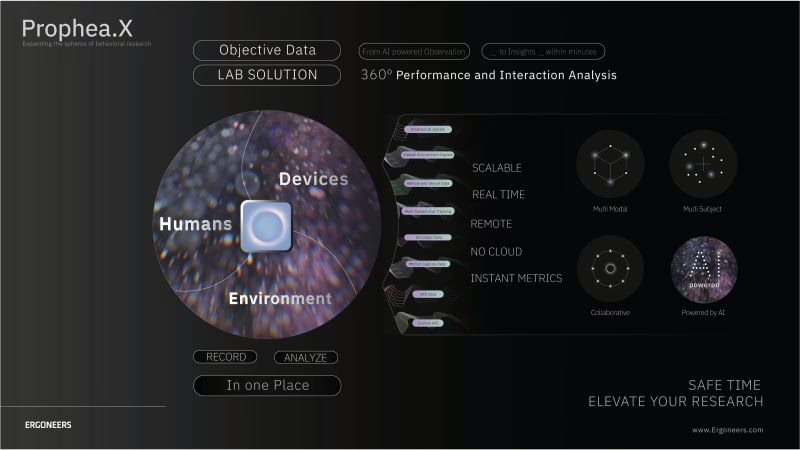
Separate devices can create data silos: each may record on its own clock, use different timestamps, and store information in a different format. A unified research workflow brings those streams onto a shared timeline, so researchers can examine what a participant saw, how physiology changed, and what the simulator was doing at the same time. Before a study, check clock alignment, event markers, data formats, and how missing or delayed samples are handled. The precision required depends on the analysis and the complete acquisition setup, so measure alignment rather than assume it.
Integrating Gaze with Physiological Sensors
Combining gaze with EEG can help researchers relate visual attention to patterns of brain activity. Heart rate and skin conductance can add context when examining workload or stress responses. These measures do not prove cognitive load on their own. Interpret them alongside the task, participant behavior, and environmental conditions. A synchronized timeline helps show whether changes occur before, during, or after a critical event.
Simulator Telemetry and Gaze Correlation
Connect gaze records to meaningful simulator events, such as a warning light activating or an altitude change. With event timestamps and a defined response measure, researchers can calculate the interval between an event and a relevant action, then compare intervals across scenarios. This makes pilot reaction-time analysis more systematic than matching separate logs by hand after a session.
Custom integration often relies on APIs or other data interfaces to transfer simulator events and sensor streams. Check which event data the simulator exposes, how it represents timestamps, and whether the integration preserves original records for review. These details affect the reliability of the final analysis.
Ergoneers’ Prophea.X, serves as a hub for complex data synchronization and multimodal analysis. It helps bring gaze, physiological measures, and simulator data into a coherent research workflow, so each stream can contribute to a broader view of human performance.
Planning a study with multiple sensors or custom simulator data? Discuss your multimodal integration needs with Ergoneers.
Elevating Human Performance with Ergoneers Simulation Solutions
For eye tracking for simulators, the tracker is only one part of the setup. Study design, synchronization, analysis workflows, and researcher expertise all influence whether recordings can support useful conclusions.
Ergoneers brings together eye-tracking hardware, research software, integration, and consulting. Its flagship platform, Prophea.X, serves as a hub for synchronizing complex data, while Dikablis glasses support eye-tracking research. The aim is to help teams interpret human behavior in context and build evidence that can inform training and human-technology design.
Custom Integration and Expert Support
Each simulator presents different practical questions. A cockpit, immersive VR setup, and desktop simulation can vary in participant movement, display geometry, sensor placement, and access to event data. Before choosing an approach, define the behaviors to measure, the signals to synchronize, and the simulator’s constraints. Ergoneers’ behavioral research lab consulting can help teams plan custom research environments around those requirements.
Technical capability also needs to become consistent practice. Ergoneers’ training and workshops can help research teams develop shared procedures for setup, calibration, data collection, and analysis. That foundation matters when a study spans multiple researchers or needs to be repeated across sessions. Ergoneers’ roots as a TUM spin-off connect its work to an academic research heritage.
Future-Proofing Your Research Lab
Plan for change without assuming every new device will fit an existing workflow. When considering new headsets, sensors, or simulator outputs, assess how they could connect to current acquisition and analysis methods. Document data formats, synchronization needs, calibration procedures, and access requirements before expanding a setup.
A research framework can begin with one simulator and evolve as study needs grow. For multi-site work, define shared protocols and verify that each location can collect comparable data. Consistency must be planned and tested, not assumed. This helps a lab extend its work while maintaining rigor.
Ready to shape a simulator study around your research questions? Discuss your simulation research needs with Ergoneers and explore how integrated tools and expertise can support human-technology interaction research.
Turn Simulation Data Into Human Insight
Eye tracking for simulators can reveal more than where a trainee looks. When researchers interpret gaze alongside simulator events and physiological signals, they have a richer basis for examining attention, workload, and performance. Data access, a tracking method suited to the environment, and reliable synchronization all help make recordings easier to inspect and analyze.
Ergoneers brings together Dikablis eye-tracking hardware, integration expertise, and Prophea.X, its flagship platform for complex data synchronization and behavioral analysis. Founded as a spin-off from TUM, Ergoneers works with research teams to shape setups around their questions, from an individual simulator study to broader research programs.
Ready to plan a simulation study around the human element? Discuss your simulation research needs with Ergoneers and explore how its tools and expertise can support clearer behavioral analysis and informed human-technology design.
Frequently Asked Questions
What is the difference between eye tracking and head tracking in simulators?
Eye tracking measures where a person looks, while head tracking measures the direction or movement of the head. A participant can turn toward an instrument while shifting their eyes to a different display, so the measures describe different parts of visual behavior. Combining them can help distinguish head orientation from gaze allocation. The right setup depends on whether the study examines visual attention, movement, or both.
Can eye tracking be used in full-motion flight simulators?
Yes, eye tracking can be used in full-motion flight simulators when the system and study protocol suit the environment. Assess how motion, head movement, equipment fit, display geometry, and calibration affect data quality. Wearable tracking may suit a cockpit where participants turn to inspect different areas, but check compatibility and tracking performance under the simulator’s actual conditions before collecting study data.
Is it possible to synchronize eye tracking data with EEG in a simulator?
Yes. Eye-tracking and EEG data can be analyzed together when the acquisition setup provides a reliable way to align timestamps or event markers. Plan how each device receives timing information, how delays will be checked, and how missing samples will be recorded. Ergoneers’ Prophea.X supports complex data synchronization, but validate alignment across the complete setup before interpreting time-sensitive relationships between gaze and brain activity.
What sampling rate is required for scientific research in simulators?
There is no single sampling rate that suits every study. The required rate depends on the behavior being measured: rapid eye movements such as saccades need finer temporal resolution than broad patterns of visual attention. Compare the device’s verified specifications with the research question, then test data continuity and accuracy in the simulator. A stated rate alone does not guarantee valid measurements.
Does eye tracking work with VR headsets in simulation environments?
Yes, eye tracking can be used in VR simulations, but the method depends on the headset and research setup. Some systems have integrated eye tracking; others may require a separate compatible device. Confirm that gaze can be calibrated and mapped to the virtual scene, and test performance during head movement. Also determine what data is accessible and how it can be synchronized with simulator events.
How do I analyze cognitive load using gaze data from a simulator?
Use gaze measures as indicators to interpret, not as a standalone measure of cognitive load. Researchers can examine fixation duration, transitions between areas of interest, missed targets, and pupil changes in relation to task events. A prolonged fixation may reflect increased processing, but it can have other explanations. Compare gaze patterns with performance and, where appropriate, physiological measures such as heart rate or EEG.
What are the common challenges of integrating eye tracking into custom simulators?
Common challenges include calibration across three-dimensional displays, parallax, movement-related data loss, and mapping gaze to simulator regions of interest. Separate devices may also use incompatible formats or clocks, making synchronization difficult. Check which telemetry the simulator exposes, whether event timestamps are available, and how data can be exported or accessed through an interface. Pilot-test the full setup to identify gaps before the main study.