

News & Posts
Boosting Efficiency in Behavior Research Labs with Integrated Software and Hardware
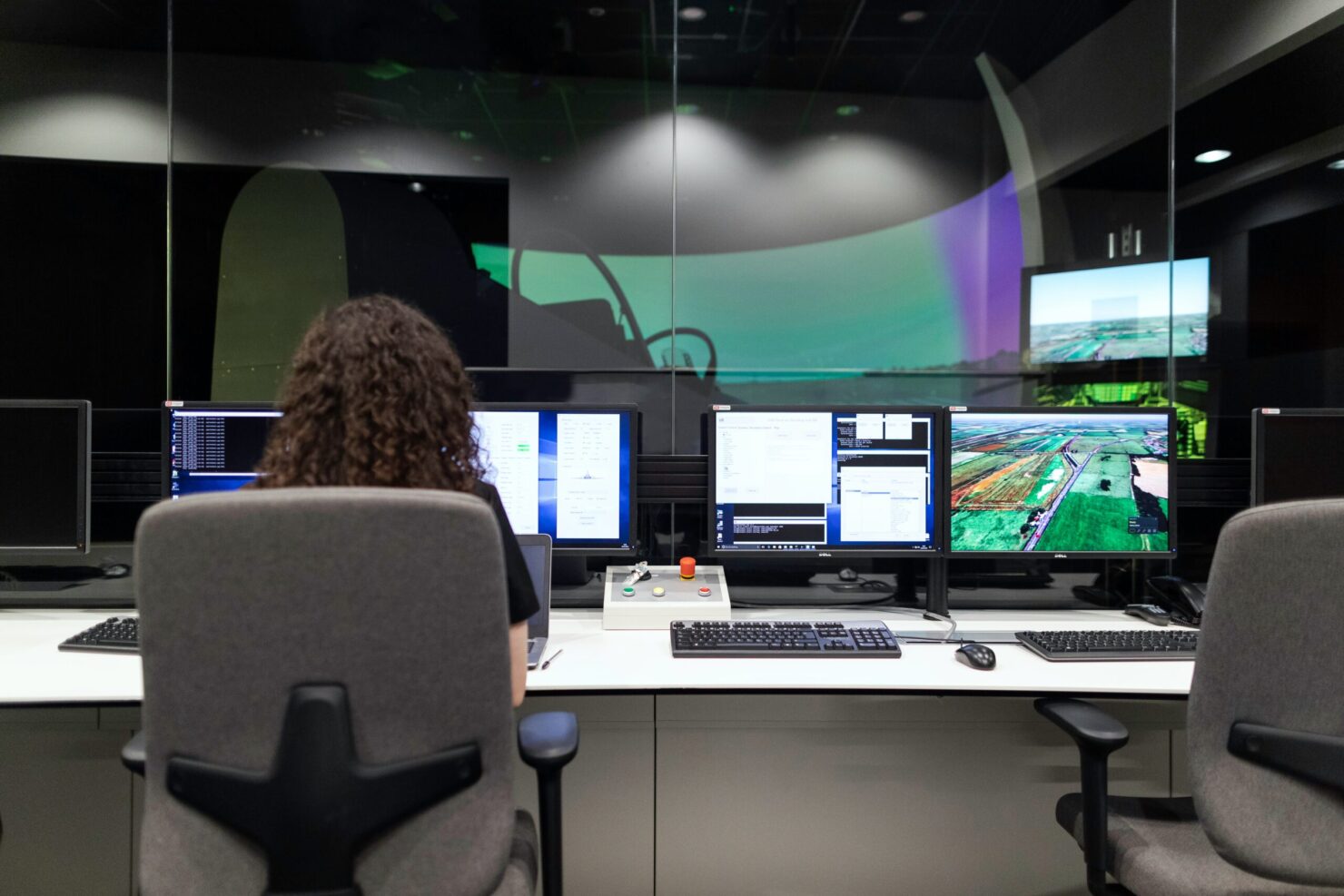
Behavior Research Labs: How to simplifying complexity.
Behavior Research Laboratories today span a wide and growing array of domains—from driver monitoring in autonomous vehicles to patient analysis in clinical settings, from human-robot interaction studies to usability testing in smart environments. These applications rely heavily on a fusion of observational methods, making labs increasingly complex to operate, scale, and standardize. At the heart of this complexity lies a common goal: capturing high-quality, meaningful data. Yet the diversity of sensors—such as video, physiological sensors, and eye trackers—along with the rising number of devices and experimental conditions, creates serious bottlenecks for lab efficiency. Synchronization, automation, and real-time analysis remain critical pain points.
Abstract
Stream-lining a behavior research lab
In this white paper, we explore how behavior research labs can streamline their operations using the right combination of software, hardware, and data protocols. We will walk through the essential components of sensor-based observation, define commonly used tools like Lab Streaming Layer (LSL), UDP/IP, and Robot Operating Systems (ROS 1 & 2), and reveal the IT hurdles behind the scenes. From event triggering and video annotation to automation and analysis via Prophea Propheadata engine and the connected analysis ecosphere, we offers a modern blueprint to make behavioral labs faster, smarter, and more connected.

© Puru Raj
Introduction
The Complexity of Multimodal Behavior Research
Modern behavior research is inherently multimodal. The depth and quality of insights rely on observing not just what participants do, but how, when, and in what context they do it. This complexity stems from the convergence of multiple observation methods and data modalities—each with its own hardware, software, and data structure.
Sensor-Based Observation: A Working Definition
Sensor-based observation refers to the use of technical systems—hardware and software—that detect and record physical signals or actions in real time. These may be directly tied to human physiology, behavior, or environmental interactions.
The three most foundational types include:
- Video Monitoring
High-resolution video remains a cornerstone of behavioral research. It captures facial expressions, gestures, and interactions in real-world or simulated environments. Video data is often annotated manually or semi-automatically and serves as a visual reference for synchronizing other data streams.
- Eye Tracking
Eye tracking systems measure gaze direction, fixation, and pupil dilation. They are essential in studies of attention, user experience, cognitive load, and human-computer interaction. Both screen-based and wearable eye trackers can be used, depending on the research setting.
- Biophysical Sensors
This includes EEG, ECG, GSR (EDA), respiration, and motion sensors (IMUs), among others. These sensor signals provide insight into internal states: Stress, workload, attention—that cannot be observed externally.
Used independently, each sensor type can offer significant data. But when combined, they allow for a multidimensional understanding of behavior—creating new opportunities for insight, but also new demands on technology and synchronization.
The Multimodal Tradeoff: Richer Data vs. Greater Complexity
The more modalities a lab integrates, the more nuanced and accurate the behavioral picture becomes. However, integration creates challenges:
- Different sensors often operate with different sampling rates and time protocols.
- Each may use proprietary software with incompatible formats.
- Manual synchronization is time-consuming and error-prone.
This is where modern labs must evolve—moving beyond ad-hoc setups to interconnected ecosystems that speak a common data language. This is where Propheadata engine comes in place. For a profound introduction into Multi Modal Research, don´t miss our corresponding article Why to use multi modal research

© Ramses Cervantes
The Technology Behind
Standard Communication Protocols in the Lab Ecosystem
In a modern behavior research lab, sensors, cameras, simulators, and external devices must “talk” to each other. Whether real-time or post-processed, the precision and integrity of multimodal data depend on how well these devices communicate. This is made possible through communication protocols—software frameworks that manage how data is exchanged, synchronized, and interpreted.
Below, we explore the most commonly used protocols in behavioral research and adjacent fields, highlighting their strengths, typical applications, and performance characteristics. Propheadata engine was designed to combine most frequent protocols on one central platform featuring global triggering, scalable, bandwidth- and performance- optimised recording, and a growing ecosphere of specialized analysis modules.
Lab Streaming Layer (LSL)
Developed by: Christian Kothe, SCCN
Purpose: Real-time collection and synchronization of time series data from multiple sources.
Latency: ~1–10 ms under ideal LAN conditions (clock-synchronized).
Usage: Widely adopted in neuroscience, psychophysiology, eye tracking, and behavioral science.
LSL allows seamless data streaming and temporal alignment between heterogeneous devices such as EEG amplifiers, eye trackers, and video capture software. It handles clock synchronization, time-stamping, and stream discovery automatically. Intrucing its own optimised interfaces Propheadata engine supports LSL to empower collective data streams of major vendors (e.g., Brain Products, Tobii, Emotiv) sensor hardware.
Strengths:
* High-precision synchronization
* Open source, cross-platform
* Compatible with multiple data modalities
* Vast landscape of available high precision sensors
Challenges:
* Requires LSL wrappers for non-native devices
Source: Kothe, C. A. (2014); GitHub SCCN LSL Repository
UDP/IP (User Datagram Protocol)
Purpose: Ultra-fast, connectionless data transmission over IP networks
Latency: ~1–5 ms one-way (on a local network)
Usage: Driving simulators, motion platforms, marker/event signaling between devices.
UDP/IP is favored for its speed—it transmits data with minimal delay by skipping handshakes and error-checking. It’s commonly used for sending event markers (e.g., start/stop triggers from a simulator) or tracking data that is continuously streamed and doesn’t require perfect reliability.
Strengths:
* Extremely low latency
* Lightweight and broadly supported
Challenges:
* No guarantee of delivery or order
* No built-in synchronization—external timestamping required
Source: RFC 768; Stevens, W. R. (1994)
ROS 1 & ROS 2 (Robot Operating System)
Developed by: Open Source Robotics Foundation
Purpose: Middleware for modular robotic systems
Latency:
* ROS 1: ~20–100 ms typical
* ROS 2: ~5–50 ms (depends on middleware QoS and configuration)
Usage: Behavioral experiments involving robots, autonomous agents, smart environments
ROS is a communication and control backbone for distributed robotics systems. ROS 1, still widely used, lacks real-time guarantees. ROS 2 improves on this by supporting Data Distribution Service (DDS), allowing fine-grained quality-of-service (QoS) configurations. ROS is increasingly used in human-robot interaction studies and behavior-in-the-loop experiments.
Strengths:
* Designed for modular system design
* Vast ecosystem of robotics tools and nodes
* ROS 2 enables near-real-time communication
Challenges:
* Complex setup
* Requires development knowledge (C++, Python)
* Not optimized for behavioral sensor data out of the box
Source: Maruyama et al. (2016); ros.org
TCP/IP
Purpose: Reliable two-way data transmission
Latency: ~10–100 ms depending on load
Usage: File transmission, logging, configuration control
Unlike UDP, TCP ensures data arrives in order and intact. However, it introduces latency due to its overhead. It’s commonly used where integrity is more important than speed—e.g., for logging completed experiment files or setting up device configurations. Propheadata engine in connection with Propheaconnection starter features TCP IP connectivity to extend laboratories to infinite scalability.
Source: RFC 793; Stevens, W. R. (1994)
CAN Bus Connectivity in Behavior Research Labs
The Controller Area Network (CAN bus) is a robust communication protocol widely used in automotive, robotics, and simulator environments. In behavior research, CAN bus is particularly valuable when integrating vehicle systems, driving simulators, or autonomous devices into experimental setups. It enables real-time exchange of data such as speed, steering angle, brake pressure, and sensor diagnostics with high reliability and low latency. CAN’s multi-master architecture ensures seamless communication between multiple embedded systems without a central host. When recorded with Prophea data engine, CAN data is directly synchronized with video, eye tracking, and physiological recordings—enabling a full-spectrum view of human-machine interaction. As noted by Bosch (2011), the protocol’s error detection and fault confinement mechanisms make it “ideally suited for time-critical, safety-relevant applications”.
The CAN (Controller Area Network) bus protocol offers significant advantages when integrating automotive or robotic systems into behavior research environments:
Strengths:
*Real-time Data Transfer: CAN bus supports fast and deterministic data exchange, making it ideal for capturing dynamic system parameters like speed, throttle position, or steering angle.
*Robustness: Designed for noisy environments, CAN ensures signal integrity with built-in error detection and redundancy features (Bosch, 2011).
*Multi-device Compatibility: CAN allows multiple electronic control units (ECUs) to communicate over a shared line without a central computer—ideal for setups involving simulators, driver assistance systems, or autonomous platforms.
*Compact Wiring: Compared to traditional point-to-point systems, CAN reduces cabling complexity, improving scalability and maintenance.
Challenges:
*Limited Bandwidth: Classic CAN is limited to 1 Mbps, which can become a bottleneck when transmitting high-resolution or high-frequency data. CAN FD (Flexible Data Rate) offers improvements but requires updated hardware.
*Protocol Translation: To integrate CAN data with behavioral data platforms like Prophea, protocol translation and synchronization middleware (e.g., LSL bridges or gateway devices) are required.
*Configuration Complexity: Interfacing CAN with research software demands expertise in message decoding, bus mapping, and time alignment with other modalities like video and biosignals.
*Access Restrictions: In some commercial vehicles or closed-source simulators, CAN access may be encrypted or restricted, requiring reverse engineering or special permissions.
Having collected 20 years of experience since pioneering CAN bus connectivity for the behavior research world, Ergoneers put all its knowledge into mitigating limitations and mastering CAN bus connectivity performance along the entire data pipeline with Prophea.X. Featuring integrated CAN bus connectivity, smart architecture and GPU powered data processing, Propheadata engine integrates directly with simulators, autonomous vehicles, robotics systems, and other machine-controlled environments for seamless interaction.
⚠️ On Performance Variability
All latency figures above and below are approximate and measured under ideal or controlled lab conditions. Real-world performance may vary based on hardware, drivers, operating system load, and network topology. For critical timing applications, local testing with precise timestamp logging is recommended. For individual assesments around your Lab, do not hesitate to contact our support team.
References for CAN Bus Connectivity
Bosch GmbH (2011).
CAN Specification Version 2.0.
The foundational specification of the CAN protocol developed by Bosch, outlining error handling, timing, and communication architecture. → Referenced in: protocol strengths, error handling, and architecture.
ISO 11898-1:2015
Road vehicles — Controller area network (CAN) — Part 1: Data link layer and physical signaling.
International standard defining CAN for automotive systems.
→ Supports claims on bandwidth, signal reliability, and physical layer behavior.
Robert Bosch GmbH (CAN FD Tech Paper, 2012)
CAN with Flexible Data Rate (CAN FD).
Describes the improvements of CAN FD over classic CAN, including higher throughput (up to 8 Mbps) and longer data frames.
→ Used in bandwidth limitations and CAN FD description.
Dworak, M., et al. (2021).
Integrating CAN bus data into human factors research: Real-time synchronization with behavioral recordings.
Proceedings of the Human Factors and Ergonomics Society Annual Meeting.
→ Discusses synchronization of vehicle data with behavioral data systems.
NI (National Instruments, 2020).
Understanding and using the Controller Area Network.
→ General overview of CAN and its research applications.
Zeltner, L., et al. (2020).
A modular hardware interface for integrating biosignal, motion capture, and CAN-based vehicle data.
Behavior Research Methods, 52(5), 2092–2105.
→ Relevant for hardware integration and challenges in behavioral experiments.

IT Challenges Behind the Scenes
The Invisible Workload
The increasing complexity of behavioral research setups—driven by multimodal data, real-time requirements, and the rise of interactive environments—has turned lab IT infrastructure into a crucial, yet often underappreciated, backbone. Behind every successful experiment lies a hidden workload: the orchestration of hardware, software, protocols, and people to make synchronization and data integrity possible.
This section explores the main IT challenges faced by behavior labs and research institutions, especially when dealing with interconnected systems.
Time Synchronization: The Hidden Linchpin
Precise synchronization across multiple data streams is fundamental to meaningful multimodal analysis. A 20 ms desynchronization between a GSR spike and an eye fixation event can alter interpretation completely.
Challenges include:
* Clock drift across devices (especially in long recordings)
* Incompatible time bases (e.g., one system logs in UNIX time, another in local timecode)
* Missing or corrupted timestamps in raw data
* Device-specific timestamping logic (e.g., video systems may stamp on frame write; biosensors on acquisition start)
Data Volume and Format Chaos
High-resolution video, raw sensor data, and system logs quickly generate enormous datasets.
A single 1-hour session with 4 video feeds, 2 biosignal streams, 2 microphones and 2 eye tracker can exceed 50–100 GB. Optimising compression, leveraging recoding frequencies, and setting up a hardware system that fits your research requirements is a central task for our Ergoneers implementation-consulting team.
How to overcome the IT burden:
* Ensuring sufficient storage throughput and redundancy
* Lowering frequency minimums according to research needs
* Using Prophea.X assures automatic data format (e.g., mp4, mp3, wav, CSV, EDF, HDF5, proprietary binaries) and timestamp consistency, compression.
* Prophea.X ensures future-proofing for long-term reproducibility through its metadata export function while raw data stays accessible.
* With open access to all calculation methods, Prophea.X provides full transparency and the possibility for individual adjustments on all parameters to researchers.
Compatibility Nightmares
Modern labs need robust data pipelines—not just folders and spreadsheets. Even when all devices work, they may still not work together. Labs often face:
* Hardware-Driver incompatibilities (especially after OS or software updates)
* Version mismatches (e.g., firmware vs SDK vs wrapper)
* Missing APIs or SDK support for non-standard sensors
* Missing support while using open-source software and protocols
Every new hardware component can add a week of integration overhead. This is where Propheadata engine has proven to become the game-changer by providing a holistic middleware platform to power device abstraction, infinitely scalable synchronization, and instant protocol bridging.
Network & Latency Management
As devices increasingly rely on Ethernet or Wi-Fi for communication (e.g., wireless IMUs, IP cameras, simulators), network stability becomes a key factor.
* Packet loss or jitter can distort time-sensitive data
* Network collisions occur when multiple devices send data simultaneously
* Buffering delays in video streams can misalign event coding
Prophea.X – The Holistic Solution by Design:
Prophea.X is purpose-built for high-performance, sensor-driven environments—where precision, speed, and reliability are non-negotiable. Its decentralized architecture brings data collection closer to the source, while intelligent load handling and GPU-powered processing ensure smooth, real-time operations. Prophea.X´s smart architecture and Ergoneer’s state-of-the-art software engineering pushes performance to new limits through:
* Decentralised data recording close to input sensors
* Reliable, global record-triggering & timestamp
* Intelligent data load management
* all powered by highly optimised GPU-powered, real-time computing. For best results, please review system requirements
For optimal performance, the Ergoneers implementation team consults on additional suggestions for performance enhancements including:
* Isolating lab systems on dedicated subnets or switches
* Prioritizing time-critical devices (QoS configuration)
* Monitoring real-time traffic with tools like Wireshark or Chronosync
Human Factors in IT
Last but not least, the IT workload isn’t just technical—it’s also human:
* Training researchers on data hygiene and proper startup/shutdown sequences
* Maintaining documentation and change logs
* Creating repeatable workflows across sessions and users
Prophea.X is designed to support collaborative workflows, enabling multiple users to divide tasks across teams and locations while working within a single, easily shareable file format. By storing Prophea.X recording and analysis files in a cloud drive, users can access, review, and contribute to the same dataset—independent of location or time zone.
The Need for Integration Platforms
Without clear processes and automation, IT bottlenecks slow down science. This is particularly problematic in large research consortia or multi-lab collaborations, where reproducibility is paramount.
Given these challenges, behavior research labs increasingly require unified platforms that:
* Abstract hardware complexity
* Automate synchronization
* Streamline data fusion and export
* Support scripting and automation (e.g., Python, MATLAB, ROS)
Propheadata engine fills this gap—serving as the unique foundation for both academic and applied labs to scale in speed and quality, especially when paired with analysis modules like Propheaeye, Propheavideo, Propheaautorecog, Propheascripting(2026), Propheamotion(2026), Propheabiometric(2026), Propheaposition(2026) and additional hardware features like PropheaVR(2026).
Events, Event Triggering, and Video Coding: An Introdiction
The Backbone of Behavioral Interpretation
In the landscape of behavioral research, raw sensor data is rarely meaningful in isolation. What transforms it into insight is the presence of events—meaningful points in time that mark behaviors, reactions, stimuli, or conditions. Whether manually annotated or automatically triggered, events are the anchor points around which we align multimodal data, derive cause-and-effect relationships, and construct rich behavioral timelines [1, 2].
What Are Events in Behavioral Research?
An event is any discrete occurrence that is marked in time—either by a researcher, a system, or an interaction. Events might include:
* Start/stop of a stimulus
* Button press or touch interaction
* Behavioral markers (e.g., smile, gaze shift, verbal cue)
* Trigger signals from devices (e.g., TTL pulse, UDP packet)
* State transitions (e.g., robot enters “autonomous” mode)
Events provide the semantic structure necessary for making sense of raw data streams like video, audio, EEG, or motion data [3, 4].
Event Triggering: Manual vs. Automatic
Manual Event Marking
Manual annotation remains a gold standard for nuanced behavior capture. Tools like Prophea.X support manual and feature automated timeline-based event coding.
Advantages:
* High semantic accuracy
* Flexibility in qualitative research
* Custom behavioral taxonomies
Challenges:
* Time-intensive
* Inter-rater variability
* Dependent on frame accuracy and synchronization [11, 12]
Automated Triggering
Automatic event triggering uses real-time signals from sensors, software, or hardware. Prophea.X uses Lab Streaming Layer (LSL) [7] and ROS2 [14] to facilitate such precision.
Trigger sources include:
* Simulator events via UDP/IP protocols [13]
* AOI transitions from eye trackers
* TTL pulses from hardware (e.g., EEG, motion sensors)
* Custom scripts (Python, ROS) broadcasting time-coded events
Benefits:
* Millisecond precision (or lower with hardware timestamping via IEEE 1588 PTP [9])
* Scalable across trials and sessions
* Reduces human error
Coding Behavioral Events in Video
Video remains one of the richest sources for observing spontaneous behavior. Coding video with time-aligned events adds interpretive power.
Common practices include:
* Assigning event types to clips or timestamps (e.g., “head turn,” “smile,” “verbal protest”)
* Defining coding schemas for consistency [11]
* Aligning video timelines with sensor data using markers or synchronization protocols
Best practices:
* Code using frame-accurate tools and document frame rate
* Use inter-rater agreement measures like Cohen’s Kappa [12]
* Link events to underlying multimodal data streams
Prophea.X combines coding functionalities and infinite scalability combined with plug-and-play connectivity.
Through elaborated video and event coding Prophea.X the platform pushes the limits beyond automation by supporting unlimited parallel multimodal timelines for even most complex realistic study-settings.
Events as Alignment Anchors
Once events are present—whether through manual coding or automated triggering—they serve as temporal anchors for data integration and interpretation [3, 8].
Examples:
* Align a GSR peak to a video-coded “anger display”
* Segment heart rate trends around an Eye-tracking “AOI fixation” event
* Link simulator performance drops with “cognitive overload” markers from EEG
Without such anchors, sensor data becomes harder to align, analyze, or replicate meaningfully.
Toward Semantic Event Layers
The central requirement for Prophea.X with its adjoint analysis ecosphere was to offer semantic event layers—events that are not just annotations but are embedded into the platform as:
* Searchable and queryable data structures
* Markers for segmentation, filtering, and aggregation
* Connectors across sensor modalities, timelines, and conditions [10]
This paves the way for smart automation, AI-assisted annotation, and cross-study reproducibility.
Summary
* Events form the temporal and semantic backbone of behavioral research
* Both manual and automated event workflows are essential and complementary
* Synchronization is critical—without it, event data loses scientific value
* Propheadata engine and the connected analysis ecosphere elevate events to active, integrated components for efficient insight generation.
Full List of References:
1. Bakeman, R., & Quera, V. (2011). Sequential Analysis and Observational Methods for the Behavioral Sciences.
2. Anguera, M. T., et al. (2018). Inductive and deductive approaches to observational research. Frontiers in Psychology.
3. Martin, J., & Bateson, P. (2007). Measuring Behaviour: An Introductory Guide.
4. Ergoneers (2024)
6. Friard, O., & Gamba, M. (2016). BORIS: a free, versatile open-source event-logging software for video/audio coding and live observations.
7. Kothe, C. A. (2014). Lab Streaming Layer (LSL).
8. Delorme, A., & Makeig, S. (2004). EEGLAB: an open source toolbox for analysis of single-trial EEG dynamics.
9. IEEE 1588-2008 Precision Time Protocol
10. Prophea data engine and analysis ecosphere (2024). Internal white paper and product documentation. Ergoneers GmbH.
11. Krippendorff, K. (2018). Content Analysis: An Introduction to Its Methodology.
12. Landis, J. R., & Koch, G. G. (1977). The measurement of observer agreement for categorical data.
13. Stevens, W. R. (1994). TCP/IP Illustrated, Volume 1: The Protocols.
14. Maruyama, Y., Kato, S., & Azumi, T. (2016). Exploring the Performance of ROS2. ACM SIGBED Review.

© Ergoneers
Welcome to what´s next
Automation and the Lab of the Future
Behavior research labs are evolving into complex, sensor-rich ecosystems where multitude of devices, data streams, and software solutions converge. Automation is the key to unlocking unprecedented efficiency, accuracy, and scalability—liberating researchers from tedious manual tasks and enabling richer, more reliable data collection and analysis.
The Role of Automation in Behavioral Research
Automation streamlines critical lab processes, including:
* Data collection: Automatically triggering recordings, sensors, and simulators based on experimental protocols.
* Event marking: Real-time, synchronized insertion of event triggers aligned with sensor data streams.
* Data synchronization: Seamless alignment of multimodal data via protocols like Lab Streaming Layer (LSL) or UDP/IP
* Preprocessing: Automated cleaning, filtering, and artifact removal from biosignals and video.
* Data management: Efficient organization, indexing, and backup of large datasets.
* Analysis pipelines: Execution of scripts or AI models to detect behavioral patterns or physiological states.
By automating these steps, labs reduce errors, save time, and increase repeatability—ensuring data integrity and accelerating insight generation
Object Recognition and Machine-Seing: The Next Frontier
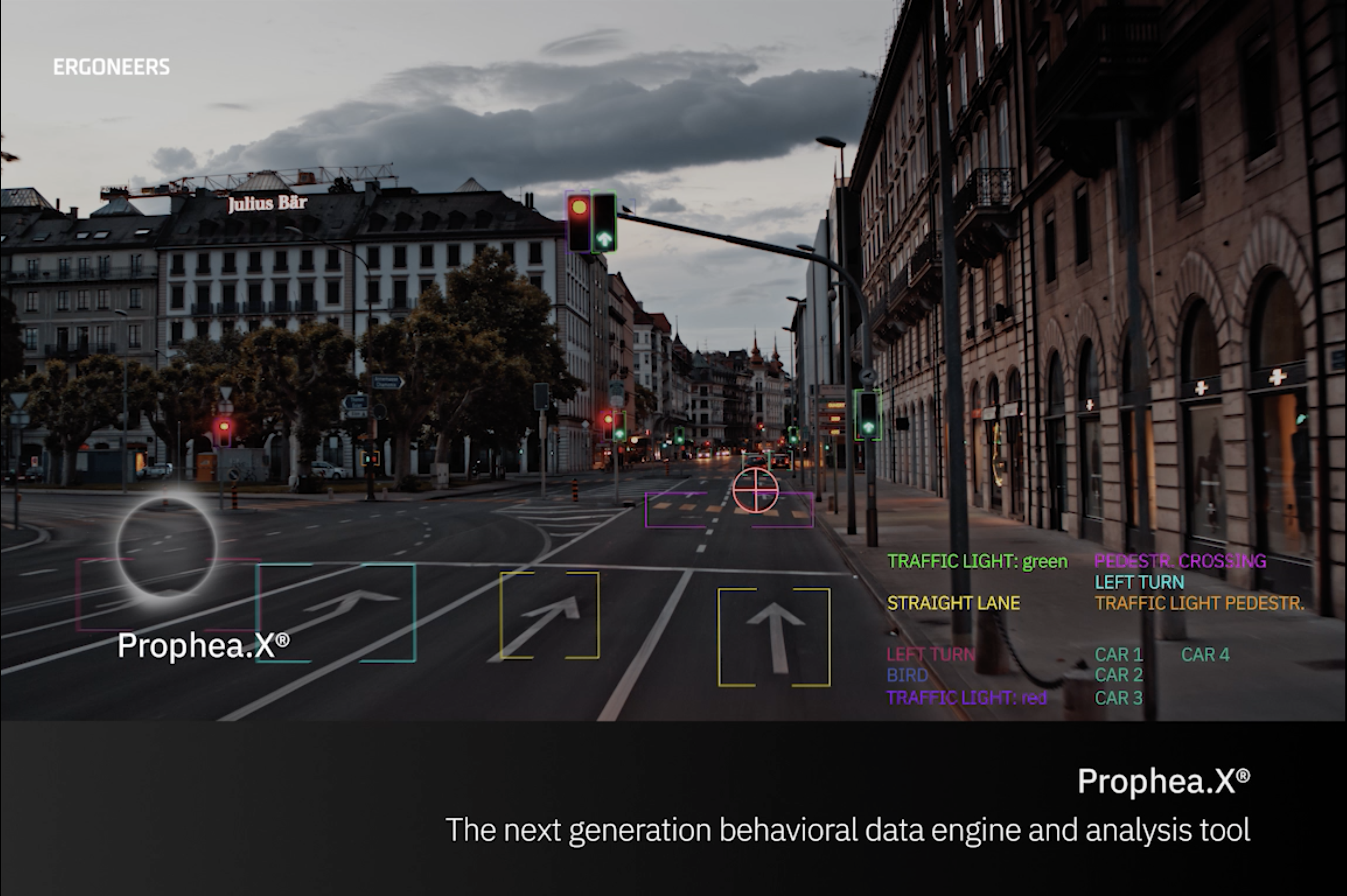
A major leap forward in lab automation comes from object recognition and machine-seeing technologies—advanced computer vision methods enabling automatic detection and classification of behaviors, objects, and environmental contexts directly from video and sensor streams.
All these capabilities come together in Propheaautorecog—the dedicated module powering intelligent, integrated performance within Prophea.X.
- Key features include:
* Automatic identification of behavioral cues, facial expressions, gestures, and object interactions
* Real-time video coding assistance reduces manual annotation burden.
* Integration with multimodal sensor data to enrich event layers semantically.
* Customizable models adapted to lab-specific contexts and research questions.
Such machine-seeing tools transform video data from a passive record into an actively annotated, richly interpretable resource—enabling fully or semi-automated behavioral coding with high precision
- Key Technologies Enabling Automation
* Event-driven architectures: Systems that respond dynamically to sensor triggers or user inputs, facilitating adaptive experiments.
* Lab Streaming Layer (LSL): Middleware protocol ensuring timestamp-accurate streaming and synchronization of data across devices.
* Robotic Operating System (ROS): Flexible communication framework popular in robotics and simulators, enabling coordinated event triggering.
* Machine learning and AI: Enabling automated video coding, behavior recognition, and anomaly detection within analysis pipelines.
* Cloud and edge computing: Supporting scalable storage, processing, and collaboration beyond the local lab
Benefits of Automation with Machine Seeing
Automation combined with machine-seeing technologies offers several critical advantages:
* Increased throughput: Automated recognition accelerates video coding and event annotation, cutting down the time needed by human coders by up to 70%
* Consistency: Reduces human bias and inter-rater variability, crucial for reproducible behavioral research.
* Scalability: Handles large-scale datasets and prolonged experiments with ease, critical as data volumes grow exponentially.
* Real-time feedback: Enables closed-loop experiments adapting stimuli or protocols based on live behavioral detection, a growing paradigm in neuroscience and behavior studies.
Automation in Practice: Prophea data engine, analysis ecosphere and Propheaautorecog
Prophea.X offers a comprehensive automation platform:
* Real-time event triggering tightly synced with sensor data streams.
* Integrated data pipelines from acquisition to analysis.
* Prophea autorecog for AI-supported video and object recognition, reducing manual coding and speeding behavioral annotation.
* Cross-modality data fusion and semantic event layers unifying behavioral insights across sensors.
This suite empowers labs to transform raw data into actionable insights efficiently, enabling new research paradigms with minimal manual overhead.
The Future: Towards the Fully Automated Behavior Lab
Lab automation will continue to evolve toward:
* AI-driven experiment design and adaptive protocols, where systems can “learn” optimal experimental parameters based on incoming data
* Multimodal closed-loop systems coordinating humans, robots, and environments in real time
* Global, networked research infrastructures sharing data and workflows to accelerate discovery
* Standardized APIs and plug-and-play sensor ecosystems simplifying integration and interoperability
These innovations promise a future where behavioral research is faster, more precise, and infinitely scalable. Combing all current features and future developments Prophea.X is setting the crucial foundation for highly automated, flexible, infinitely scalable and most important, precise and valuable behavior research, done at. afraction of the time and cost of today. The optimization of your research lab starts today with Prophea.Xdata engine.
References
Bakeman, R.; Quera, V. (2011). Sequential Analysis and Observational Methods for the Behavioral Sciences.
Anguera, M. T., et al. (2018). Inductive and deductive approaches to observational research. Frontiers in Psychology.
Martin, J.; Bateson, P. (2007). Measuring Behaviour: An Introductory Guide.
Friard, O.; Gamba, M. (2016). BORIS: a free, versatile, open-source event-logging software for video/audio coding and live observations.
Kothe, C. A. (2014). Lab Streaming Layer (LSL).
Delorme, A.; Makeig, S. (2004). EEGLAB: an open source toolbox for analysis of single-trial EEG dynamics.
IEEE 1588-2008 Precision Time Protocol
Propheadata engine (2024). Ergoneers GmbH. Prophea.X Solutions
Krippendorff, K. (2018). Content Analysis: An Introduction to Its Methodology.
Landis, J. R.; Koch, G. G. (1977). The measurement of observer agreement for categorical data.
Stevens, W. R. (1994). TCP/IP Illustrated, Volume 1: The Protocols.
Maruyama, Y., Kato; Azumi, T. (2016). Exploring the Performance of ROS2. ACM SIGBED Review.
S.E. Roian Egnor, Kristin Branson (2016) Computational Analysis of Behavior,
D. Gowsikhaa, S. Abirami & R. Baskaran (2012) Automated human behavior analysis from surveillance videos: a survey
Mathis, A.; Mathis, M. W. (2020). DeepLabCut: markerless pose estimation of user-defined body parts with deep learning. Nature Neuroscience.
Hashem, I. A. T., et al. (2015). The rise of “big data” on cloud computing: Review and open research issues.
Satyanarayanan, M. (2017). The Emergence of Edge Computing.
Ergoneers GmbH (2024). Prophea auto recog: AI-based behavioral coding and object recognition.
Conclusion
Actionplan & Summary of Improvements
The IT backbone of behavior research labs must support complex multimodal integration, event-driven workflows, scalable storage, and automation. Platforms like Prophea data engine and connected analysis ecosphere are designed to tackle these challenges by providing modular, interoperable, and scalable IT infrastructures that enable seamless research workflows—from raw data capture to insightful analysis.
Behavior research labs stand to gain significantly from adopting integrated software and hardware ecosystems. Key improvements include:
* Simplified multimodal data management through unified platforms that handle sensor fusion, synchronization, and storage.
* Enhanced precision and reproducibility by leveraging advanced event management and low-latency triggering systems.
* Accelerated workflows thanks to AI-assisted automation in video coding, data preprocessing, and event detection.
* Flexible, scalable lab architectures that accommodate evolving research designs and increasing data volumes.
A Future-Proof Roadmap for Behavioral Research Labs
To remain at the cutting edge, labs should:
* Invest in modular, interoperable platforms such as Prophea Data Engine and Ecosphere.
* Embrace automation and AI to reduce manual workload and increase data reliability.
* Prioritize robust IT infrastructures that support real-time data synchronization and secure, scalable storage.
* Foster collaboration by standardizing data formats and leveraging open communication protocols like LSL and ROS.
By following these guidelines, behavior research labs can enhance efficiency, generate deeper insights, and future-proof their experimental capabilities.
Integrated Platforms: Propheadata engine & Ecosphere
How Integrated Systems Simplify Lab Management?
Modern behavior research labs demand solutions that bridge the complexity of multimodal data capture, synchronization, and analysis. Prophea data engine and its connected analysis module ecosphere are designed specifically to meet these challenges.
By centralizing sensor data streams, event logs, video feeds, and simulation outputs, Prophea.X provides:
* Unified data management: Eliminating the need for multiple disparate tools and manual data merging.
* Modular flexibility: Researchers can customize workflows by selecting only the relevant sensor modules and analytic tools, enabling tailored experimental designs.
* Real-time data synchronization: Utilizing protocols like LSL and ROS ensures consistent timestamps across all devices, simplifying downstream analysis
Unlocking Smarter Insights Through Modular Analysis
The Ecosphere analysis environment further empowers researchers by integrating machine learning, statistical modeling, and visualization tools into one ecosystem. This enables:
* Automated preprocessing: Reducing human error and speeding up data cleaning with AI-powered pipelines
* Event-driven analytics: Dynamic identification and correlation of events with physiological and behavioral data streams
* Scalable data workflows: Supporting experiments ranging from small pilot studies to large-scale multi-subject designs with cloud-enabled resources
Together, Prophea.X reduces IT overhead, minimizes integration risks, and provides a future-proof foundation for behavior research.


